Style guide
Patagonia Synchilla Snap-T: history, tag dating and fit
The four-snap fleece pullover that started as a climbing layer and ended up everywhere. Here's where it came from, how to read the tag, how it fits, and how we look after the ones that come through our shop.
Reviewed by Tripp on November 9, 2026
Where the Snap-T came from
Patagonia's early insulating layers were pile and bunting made from polypropylene. They were warm and shrugged off moisture, but the Victoria and Albert Museum's catalog note on the Snap-T says those first fabrics pilled fast and could melt in a commercial dryer. Patagonia worked with the Massachusetts mill Malden (later Polartec) on something softer, and the result was Synchilla, a double-faced fleece whose name blends "synthetic" and "chinchilla."
The switch to polyester came after a 1984 trade show, where Yvon Chouinard saw polyester football jerseys made by Milliken that had been treated to move moisture. Polyester also stands up to dryer heat far better than polypropylene. The polyester Synchilla fleece launched in 1985, and Patagonia dates the Snap-T design to that year.
Gear Patrol tells the side story of the chest pocket. Early fleeces had a square pocket, and sailors complained that sunglasses slid toward the armpit. A designer on Patagonia's first sailing line angled the pocket to a point so whatever is inside settles on a diagonal, which is why the flap on a Snap-T sits off-center.
Complex's history of the brand credits 1989 with adding the snap-closure pocket "along with some even wilder colorways," and the early 1990s with printed versions, including stripes and Southwestern-style patterns. We haven't yet matched that 1989 detail to a dated tag of our own, so treat it as reported, not confirmed.
In 1993 Patagonia started making Synchilla from recycled soda bottles. A 1995 Maine Times story put it at about 26 bottles per pullover. Recycled content has stayed part of the Synchilla story since.
How to spot a Snap-T
The details that make a Snap-T a Snap-T:
- Four snaps down a short placket at the neck, usually in a contrasting colour.
- A chest pocket with a snap flap on the left side. The flap is cut on an angle, not square.
- Contrast binding at the collar, cuffs and hem on most colourways.
- Synchilla fleece on both faces: soft and slightly nubbly, not the smooth sweater-knit face of a Better Sweater.
Plenty of Patagonia pullovers borrow one or two of these, like the snap placket on deep-pile and shearling-style pullovers. If there's no angled chest pocket, call it a cousin, not a Snap-T. Patagonia also makes a Lightweight Synchilla Snap-T. It looks almost the same but feels thinner. Searching the style number on the care label is the surest way to tell them apart. We're still checking whether older labels name the weight.
Dating a Snap-T by its tag
The care label is where the date lives. From about 1988 on, Patagonia labels carry a style number followed by a season code: F or FA for fall, S for spring, then the year in one or two digits. "S8" reads as spring 1988 and "FA99" as fall 1999. From around 1995 a short colour code was added as well.
The single-digit years repeat, so "S9" could be 1989 or 1999. The colour code helps here: TRUSS Archive points out that the older tags don't have one. The RN 51884 number appears on everything Patagonia makes and won't date anything. Our full walkthrough with tag photos is in how to date vintage Patagonia tags.
Made in USA on the neck label is a good sign of an earlier piece. Most later Synchilla was made abroad, but don't treat the country alone as proof of a year.
Colourways
Much of the appeal is colour. Complex lists burgundy, turquoise, magenta and bright red among the late-80s colours, followed by printed fleeces in the early 90s. Plain greys, navies and oatmeal tones have been made throughout. A saturated, contrasting colourway with a US-made label is the combination collectors look for first.
Fit and sizing
Synchilla is cut roomy. Reviewers comparing it with the Better Sweater describe Synchilla as relaxed and a little boxy, with space to layer, while the Better Sweater sits closer to the body. We haven't measured enough vintage Snap-Ts yet to say how older cuts compare with current ones. The table below will show it as it fills in.
Our advice:
- Your usual size gives the classic boxy look over a tee or thin shirt.
- Size down if you want it closer to the body or you're between sizes.
- Women's Snap-Ts are cut separately. Compare pit to pit and length, not the letter on the tag.
Always check the measurements on the listing. We measure every piece flat, and a tag size is only a starting point on fleece that may be thirty years old.
Care
What we do with every Synchilla piece that comes in:
- Wash cold, inside out, on a gentle cycle, zipped and snapped closed so the snaps don't catch.
- Skip fabric softener, which can flatten the pile.
- Line dry, or tumble on low. Fleece dries quickly anyway.
- Pilling is normal on older fleece. A fabric shaver on its lowest setting tidies it without thinning the fabric.
Before you buy a vintage Snap-T
Look closely at the pile under the arms and along the cuffs, where wear shows first. Snaps should close firmly. A faded neck label isn't a flaw, but check that the care label is still readable if dating matters to you.
Measured sizes
| Tag size | Length | Pit to pit | Piece |
|---|---|---|---|
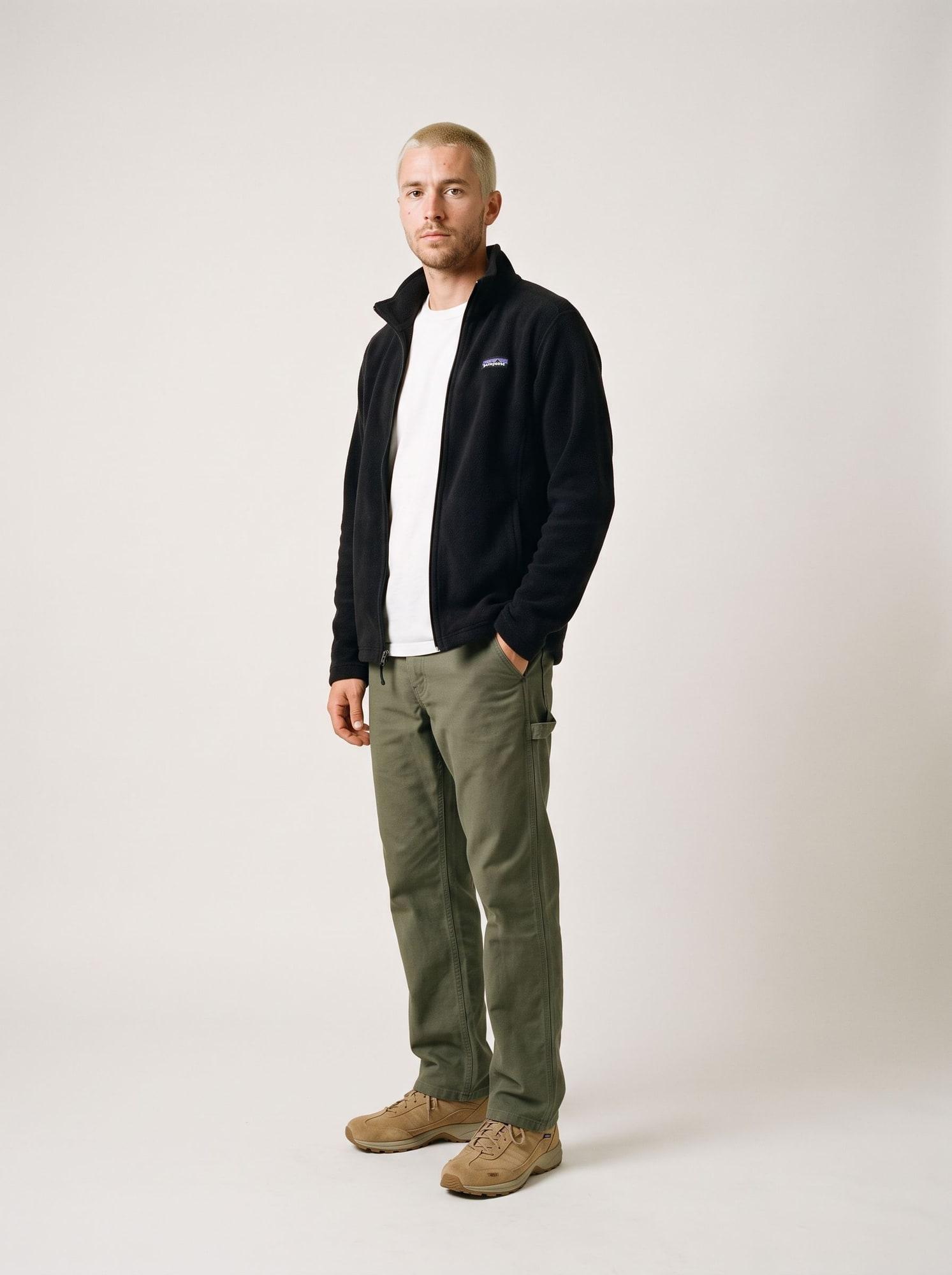
| S | 24 in | 18.5 in | Synchilla Black Fleece Full Zip Jacket |
Why there's no full size table yet: we've measured only one Synchilla piece so far, and it's a full-zip, not a Snap-T. We only publish measurements of pieces we've laid flat ourselves, so this table will grow as Snap-Ts come through the shop. Until it reaches five, check the measurements on each listing.
Measured flat, in inches. Pit to pit is armpit seam to armpit seam across the front.
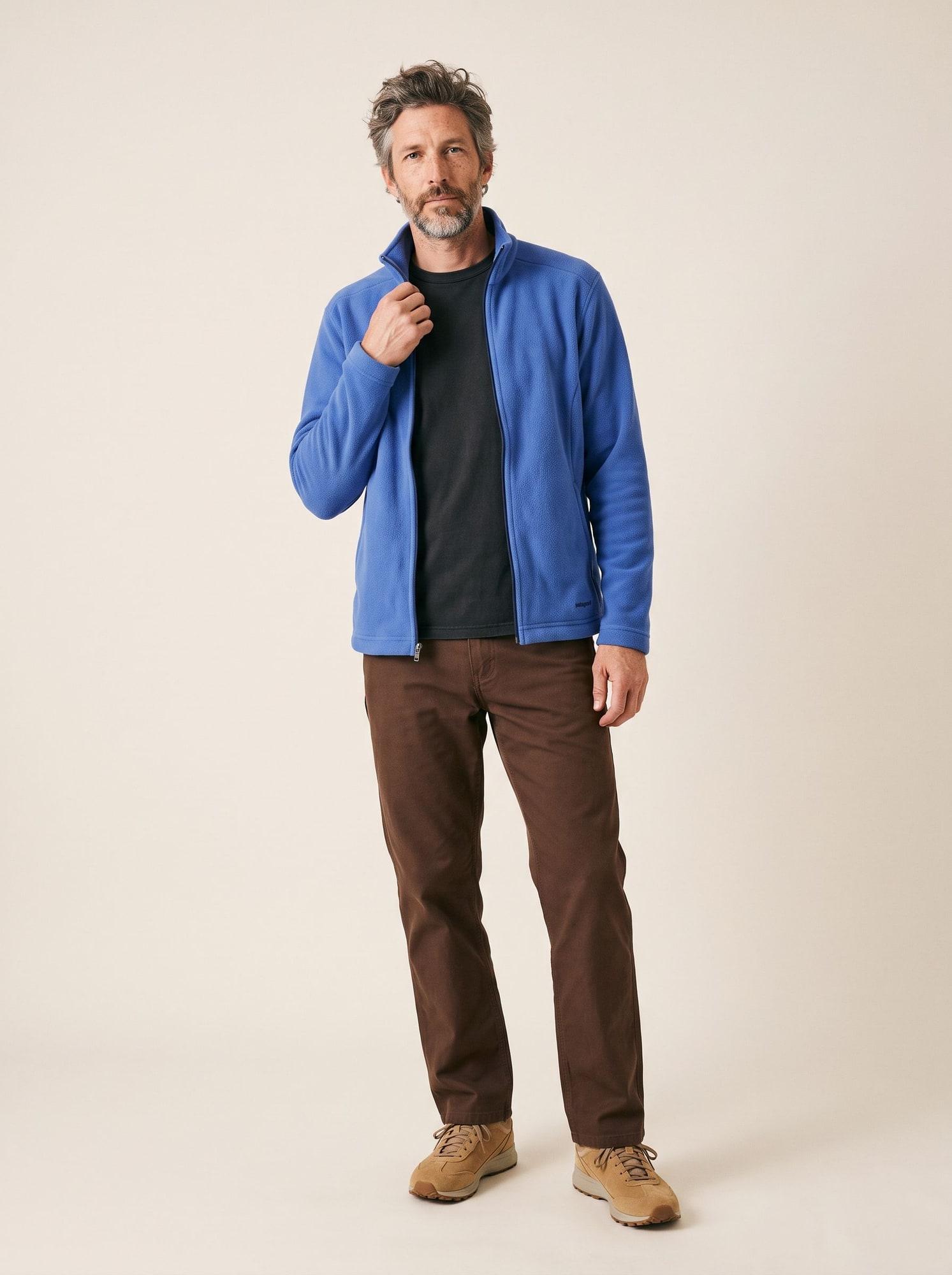
In the shop now
Sources
- Victoria and Albert Museum: Snap-T fleece, Patagonia (T.2-2017)
- Gear Patrol: The pocket on your Patagonia fleece has a secret feature
- Complex: A history of Patagonia bro style
- Maine Times (1995), via Portland Public Library: Patagonia's post-consumer recycled Synchilla
- Vintage Rare USA: Patagonia label history and iconic items
- TRUSS Archive: How to identify Patagonia
- Apart Style: Patagonia Synchilla vs Better Sweater
Drafted with AI tools; facts, dates and measurements checked by hand against the sources above and our own tags. Brand names are used to describe pre-owned pieces; we're independent and not affiliated with any brand.
Every piece is one of one
When it sells, it's gone. New pieces land every week.